Next case
Previous case
Pitch
How can nature-based solutions respond to the fragmentation between urban functions, broken infrastructural connections, flooding, and excessive asphalt that creates urban heat islands in post-industrial areas of our cities?
Download Press Package
A city closely connected to water

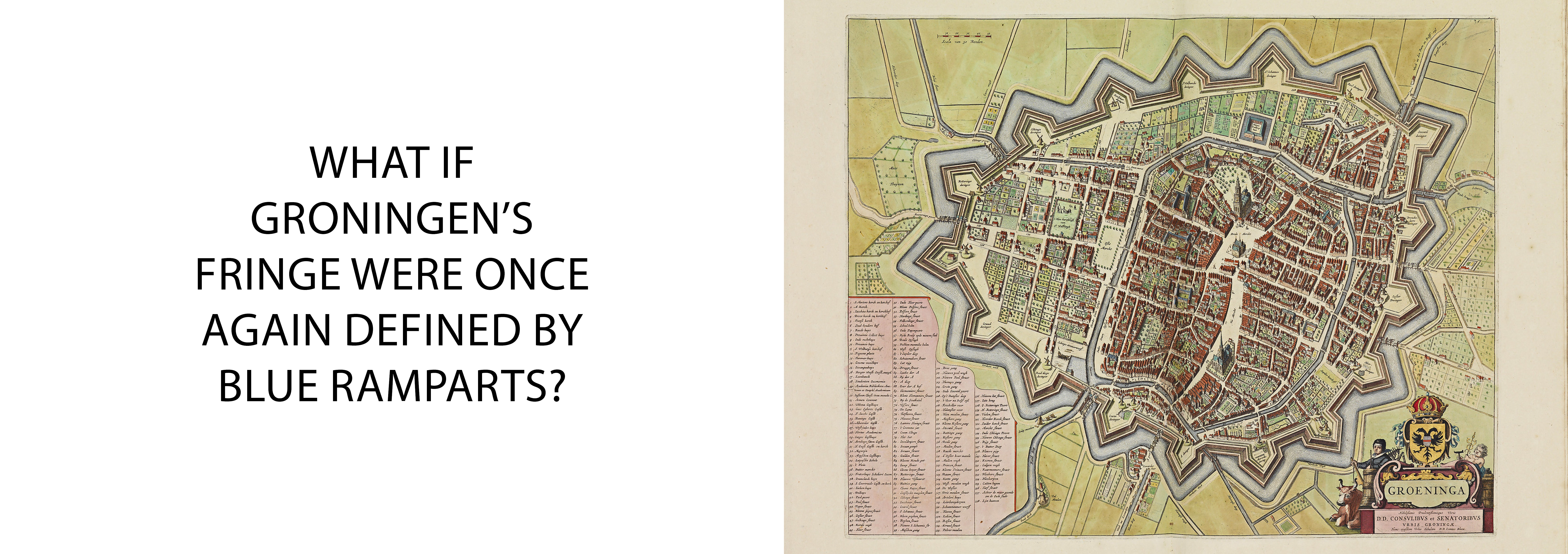
Groningen has always been closely connected to water. Its canals once formed the logistical backbone of the medieval city. Over time, industrial expansion and mono-functional infrastructure divided the urban fabric, weakening the historic relationship between city and water and limiting possibilities for future development.

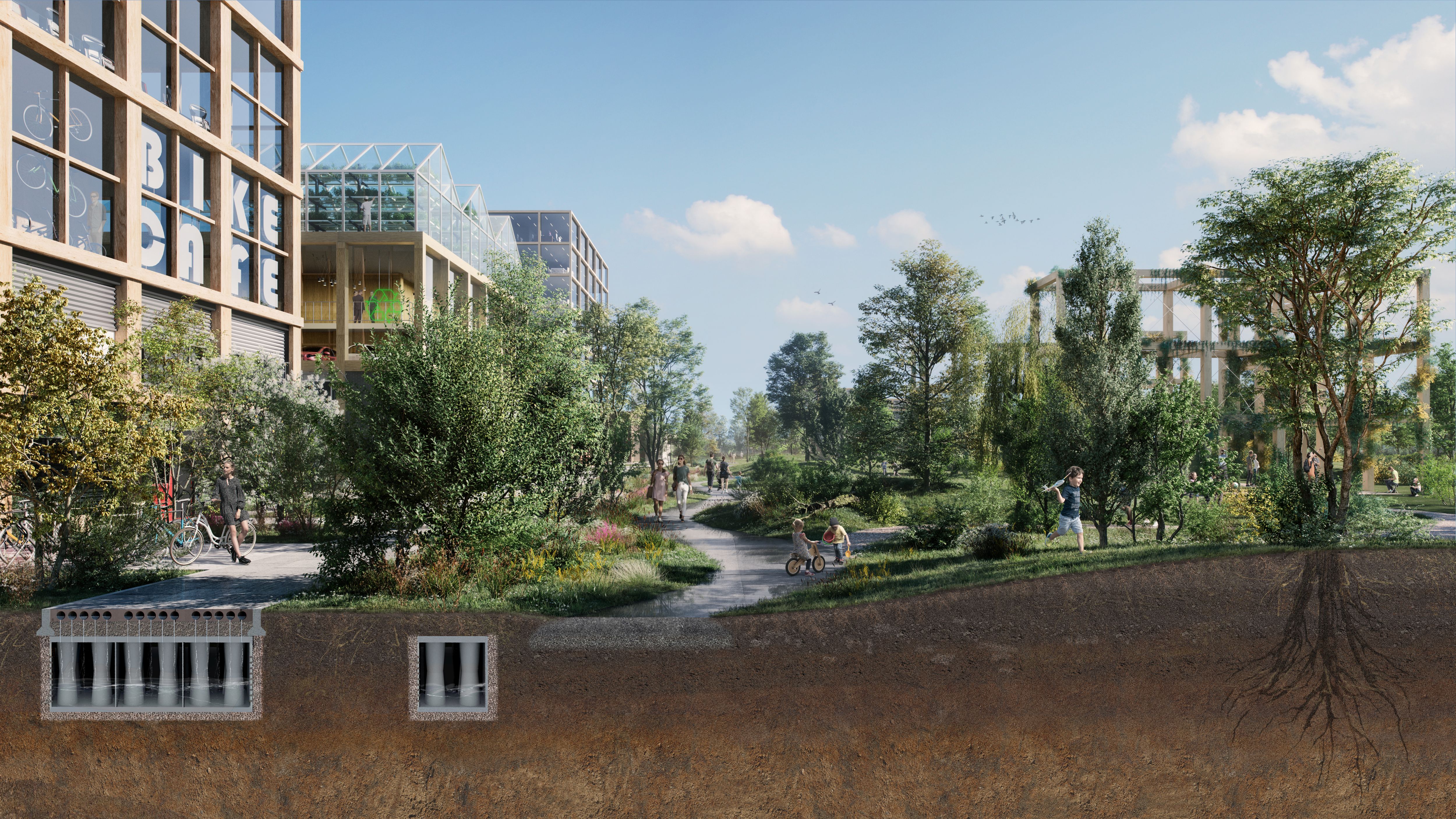
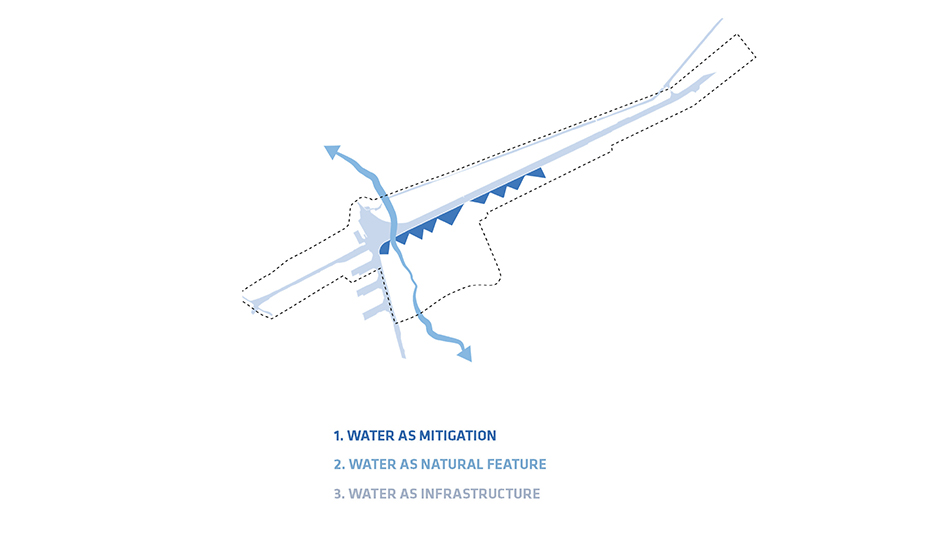
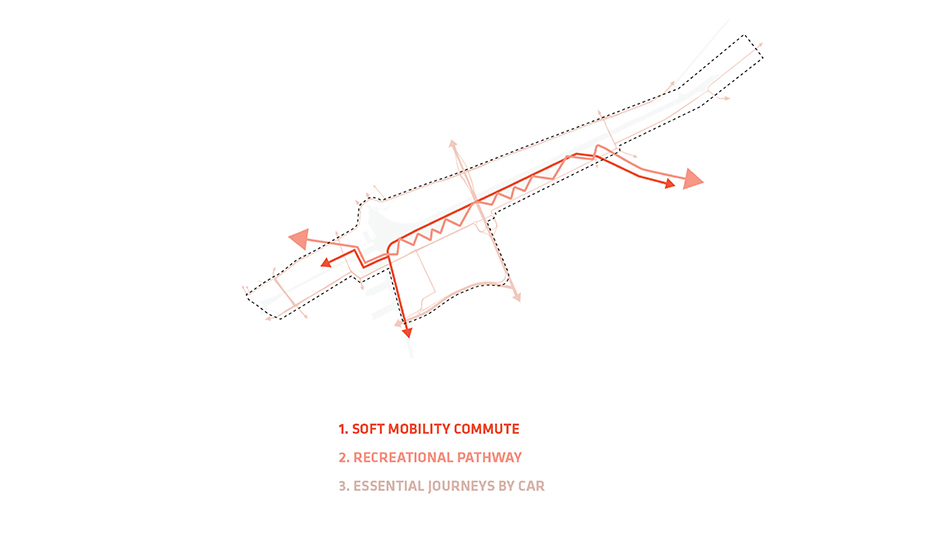
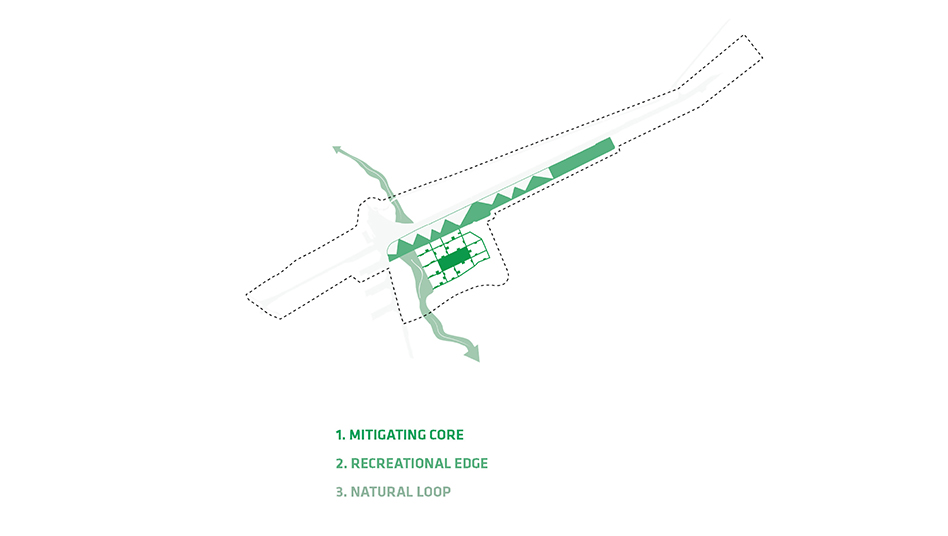
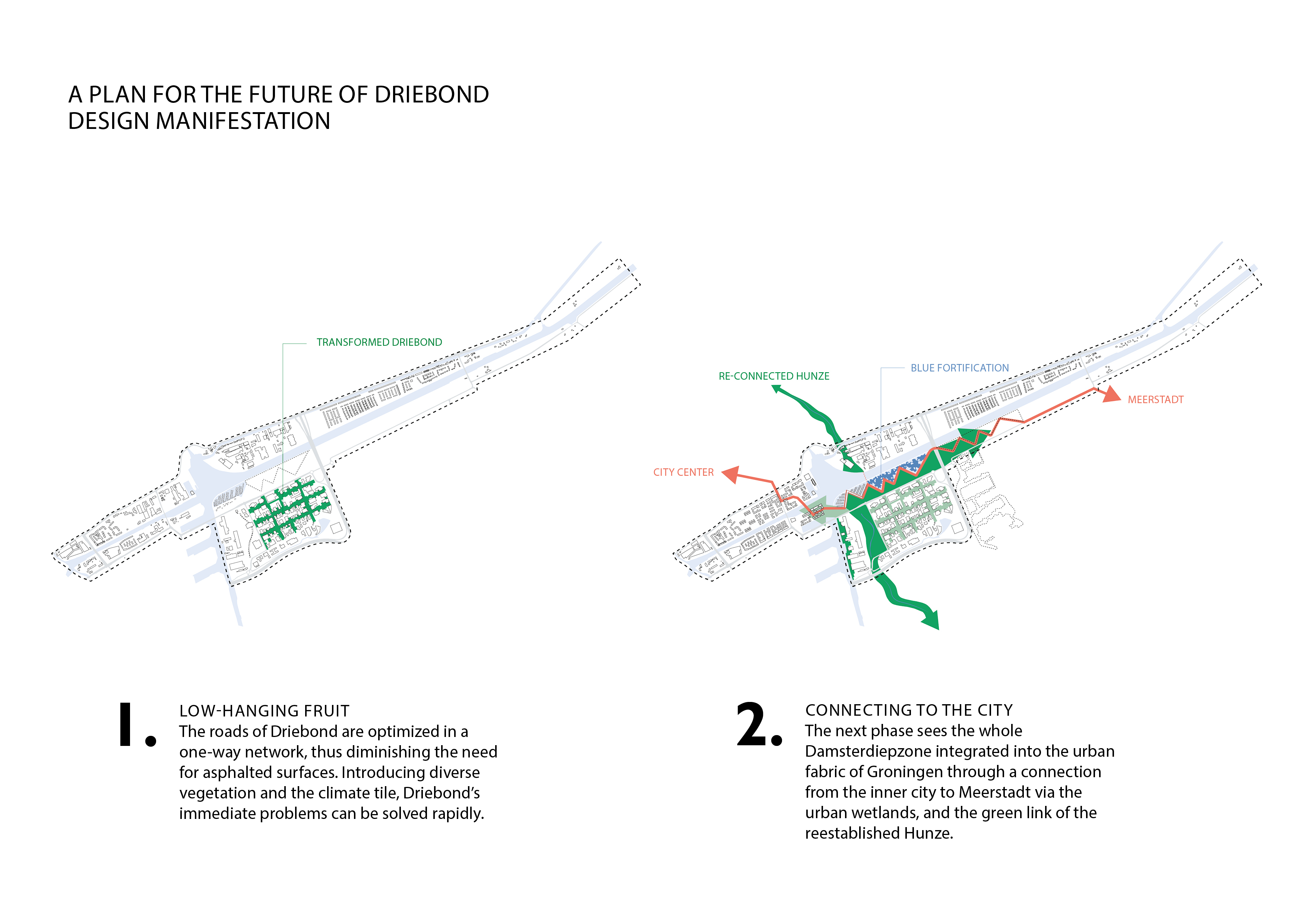
The new masterplan reactivates Groningen’s characteristic blue and green landscapes. A new public realm in the form of an urban wetland becomes both flood reservoir and rainwater system, while strengthening biodiversity. Seasonal changes in water and vegetation shape anew recreational landscape, offering pedestrians and cyclists a different experience of nature and city, and reconnecting areas that have long been separated by infrastructure.
Key numbers
No items found.
From grey asphalt deserts to blue-green landscapes

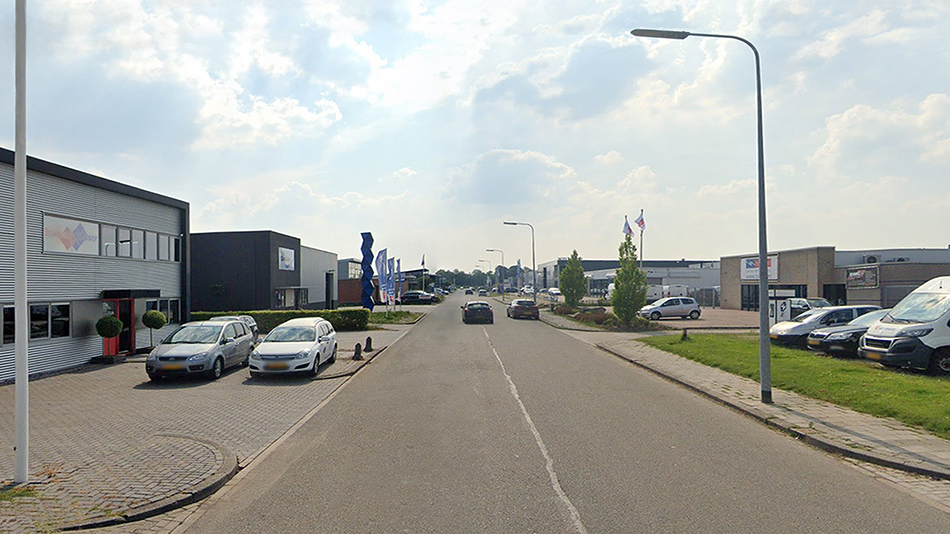
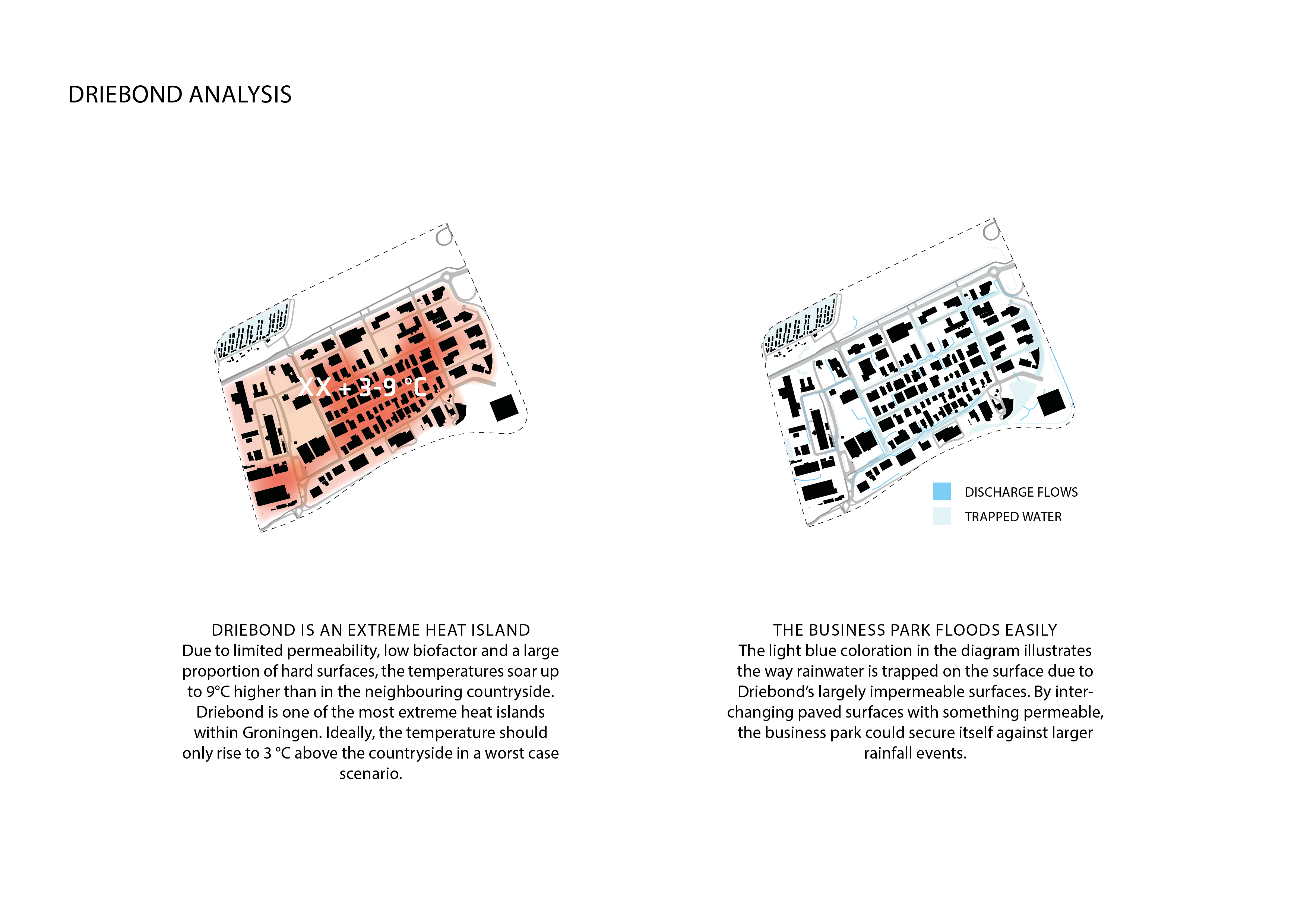
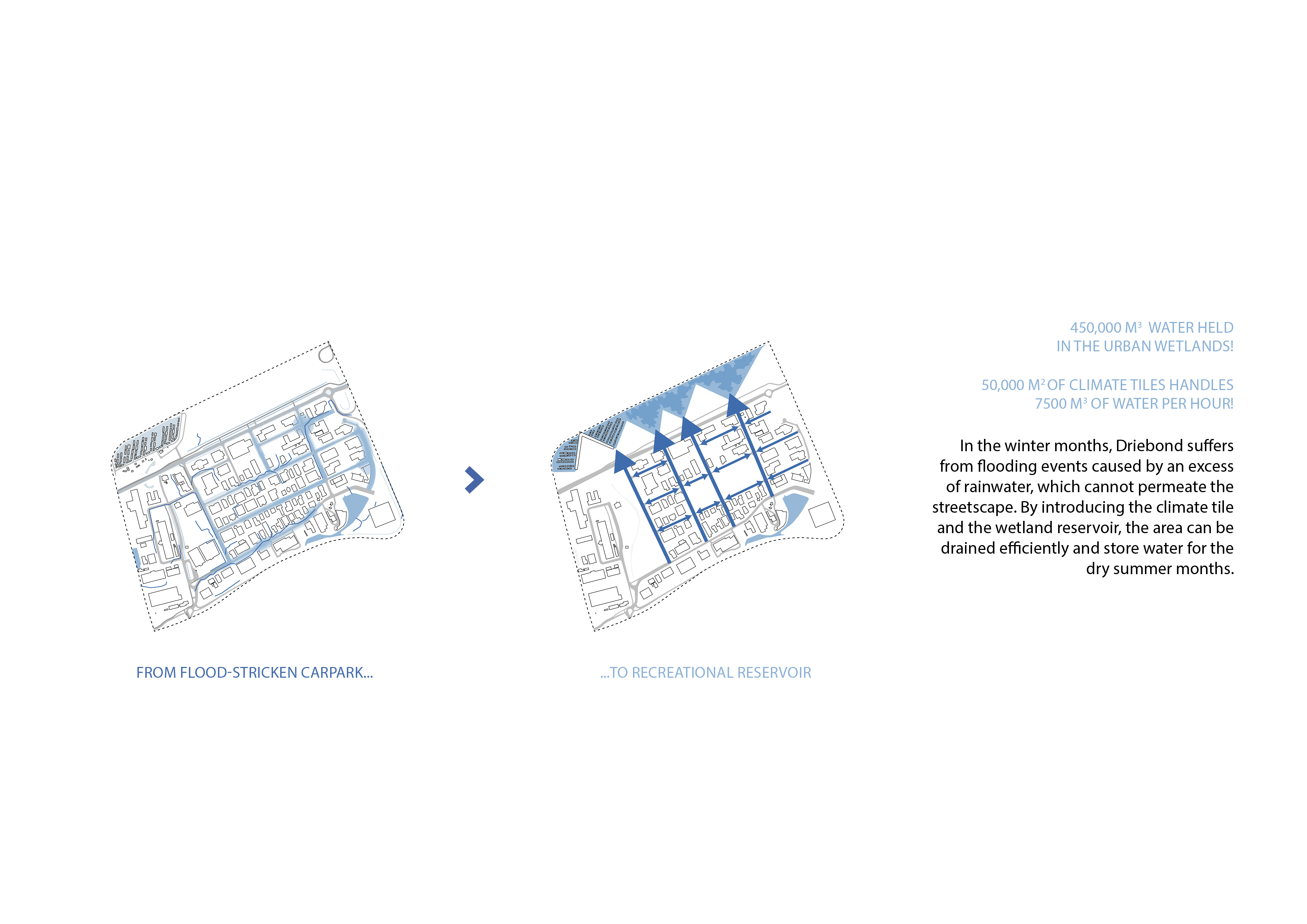
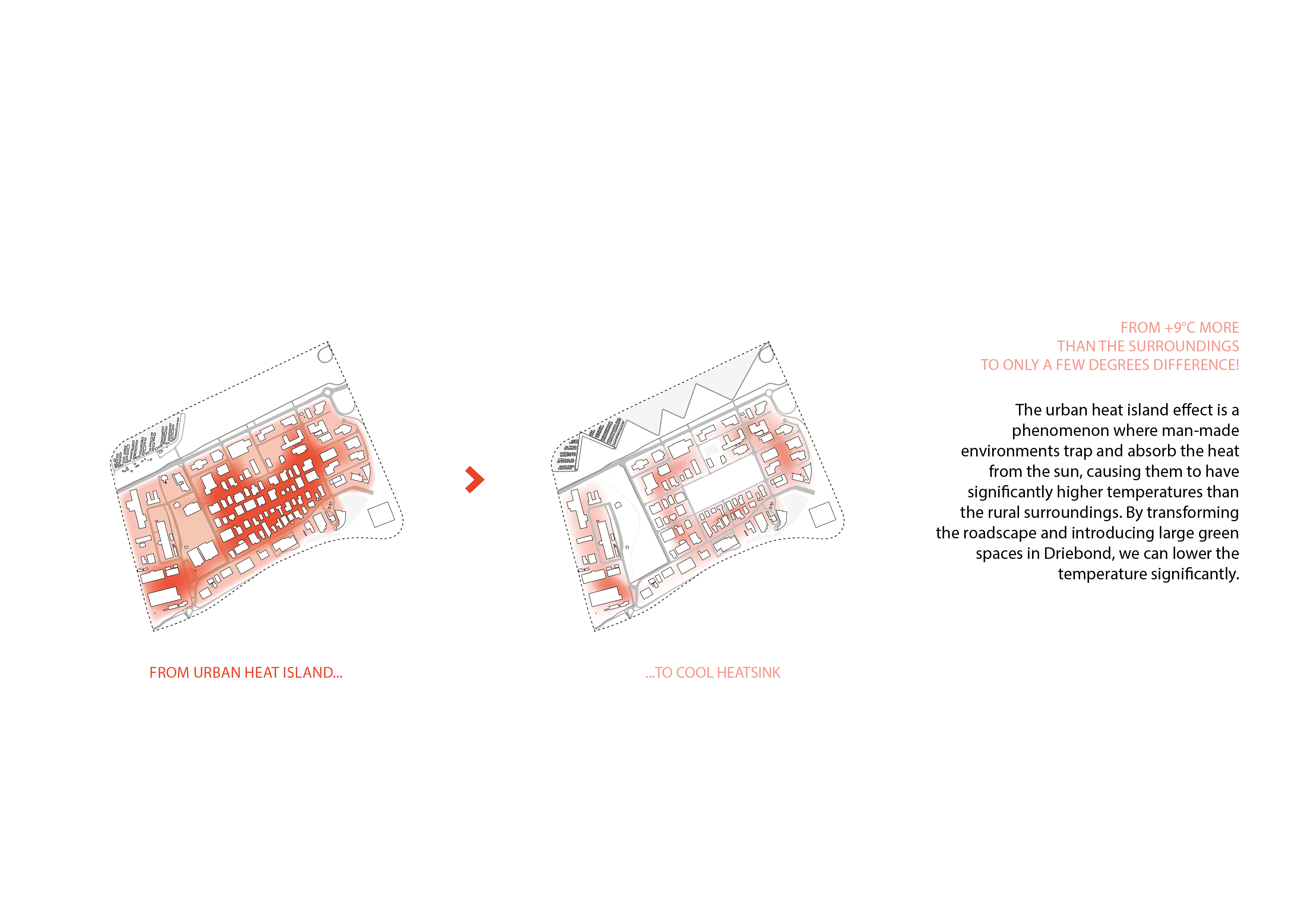
Today, the Damsterdiep zone is dominated by asphalt. During heavy rain, water accumulates on hard surfaces, and in summer the area is affected by urban heat islands, where heat is absorbed and reflected by asphalt and where the lack of vegetation and water limits cooling. In Damsterdiep zone, temperatures can rise to nine degrees higher than in nearby rural landscapes.

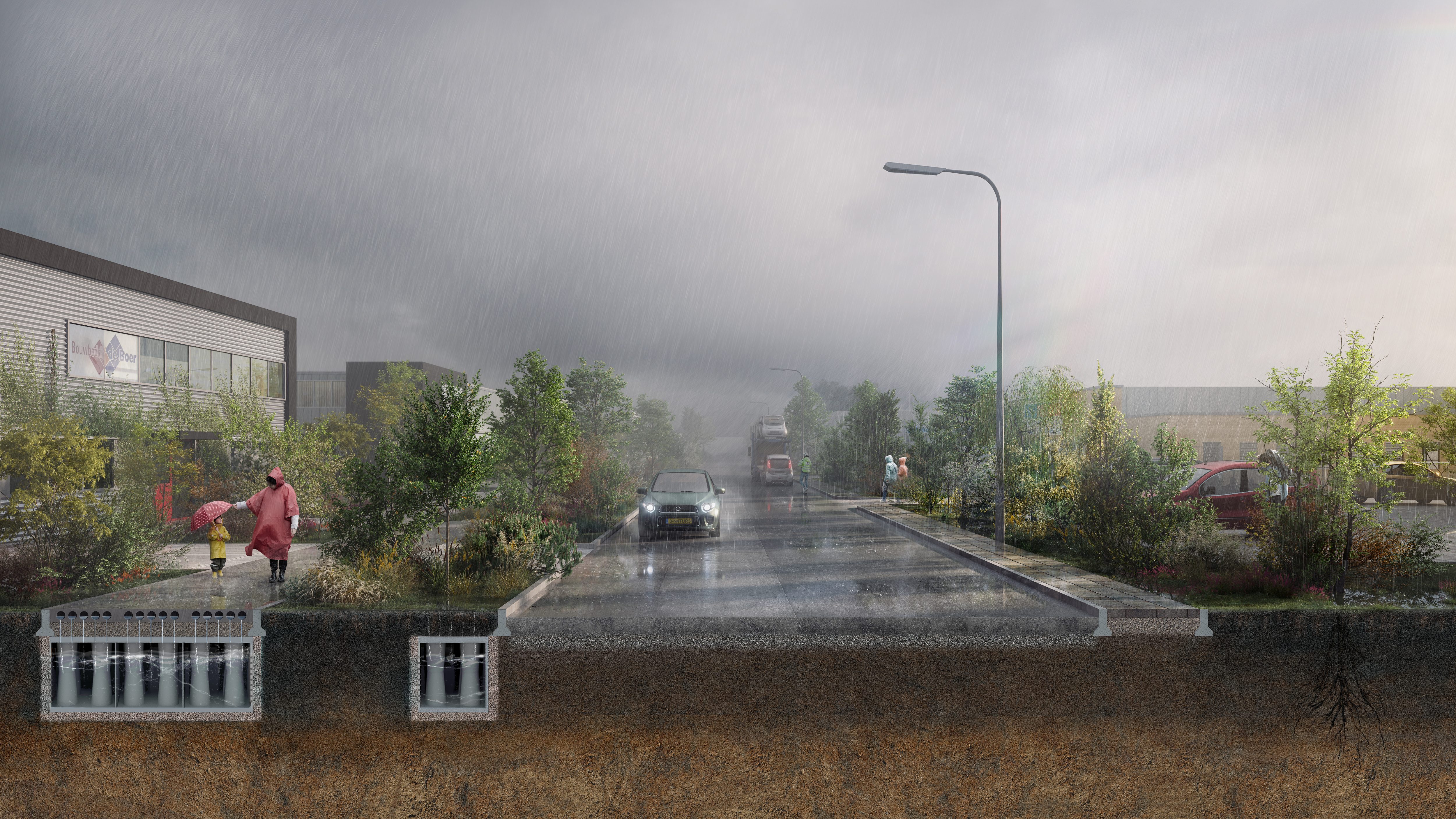
By reinterpreting the historic fortification systems, The Blue Ramparts introduces a reservoir with a capacity of 450.000 m³ to handle the large volumes of rainwater that currently collect on asphalted surfaces. At the same time, more than 50.000 m² of Third Nature’s Climate Tile is proposed to be implemented in streets and sidewalks. The permeable surface allows up to 7.500 m³ of water per hour to pass through, directing it toward the reservoir, to sewers or into adjacent planting beds. Extreme rainfall is turned into a resource that irrigates trees, bushes and grasses, strengthening local biodiversity.

As asphalt is replaced by climate-adaptive surfaces, water and vegetation, cooling through shade and evaporation becomes part of the new urban structure. With this transformation, the urban heat island effect is reduced so that only a few degrees of temperature difference remain compared to surrounding rural areas.

A regenerative district

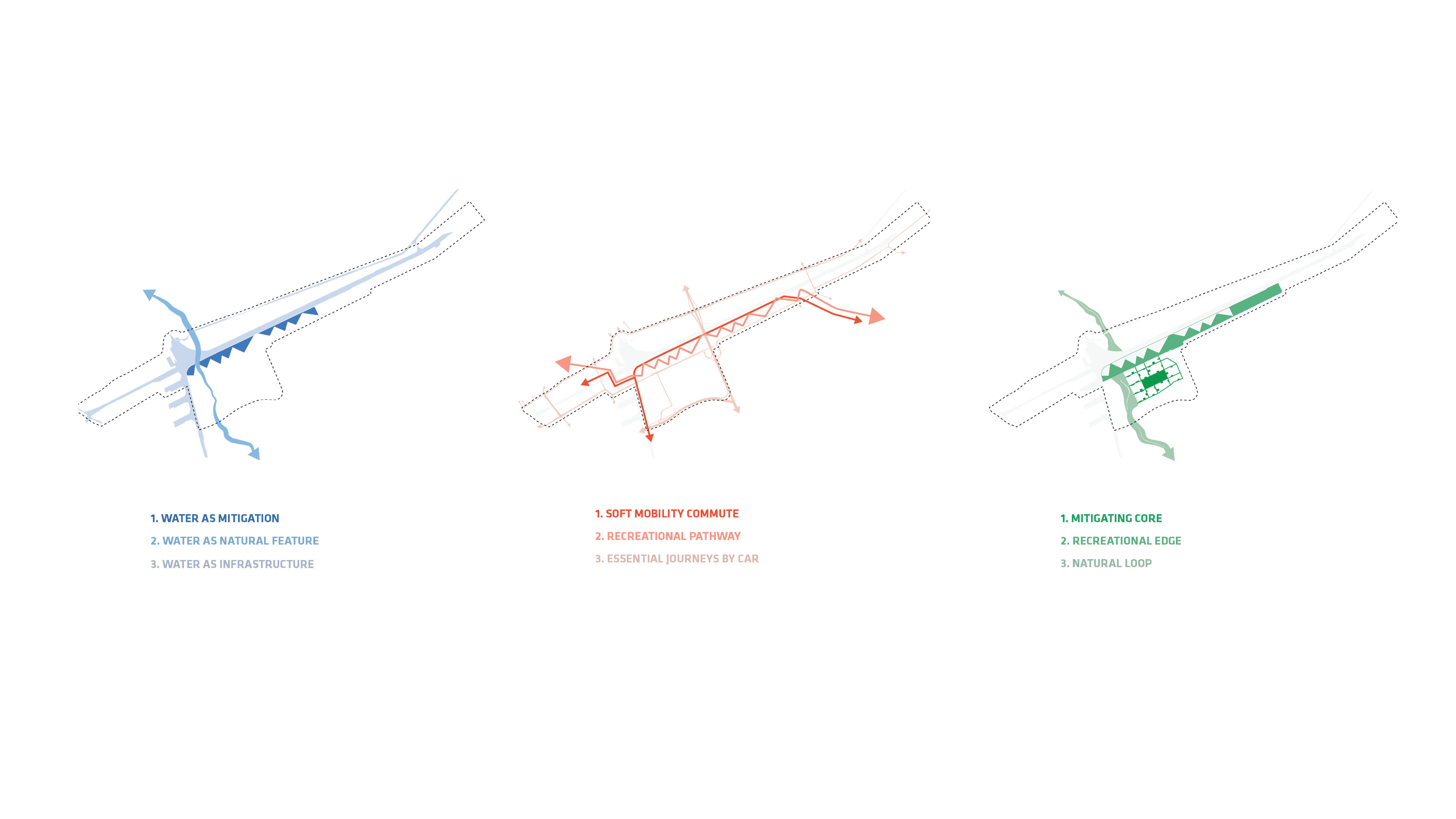
The masterplan transforms Damsterdiep zone from an industrial mono culture into a diverse and regenerative urban district. The large reservoir forms a blue-green landscape that offers pedestrians and cyclists a new recreational route toward central Groningen, while the canal continues to function as an infrastructural artery for industry.

By integrating water management, climate adaptation, green mobility and public life into one coherent system, The Blue Ramparts restores Groningen’s relationship to water and nature. The project demonstrates how nature-based solutions can shape a city that adapts to climate change while creating a richer and more sustainable urban life.

Contact the team

General inqueries
Open external browser tap
No items found.
Project information

Project name
Groningen

Client
Gemeente Groningen og provincie Groningen

Location
Damsterdiepzone, Driebond, Groningen, Holland

Type
1st prize in prequalified competition

Role
Lead consultant, urban and landscape design

Team
Third Nature

Period
2020 - 2021

Status
Realized