Next case
Previous case
Pitch
The Railway District reimagines a central industrial area in Copenhagen as a resilient, inclusive, and green urban neighborhood. By integrating heritage, nature, and innovative mobility solutions, the district transforms from a historic rail yard into a vibrant new hub for living, working, and recreation.
Download Press Package
Building the future of a sustainable neighborhood

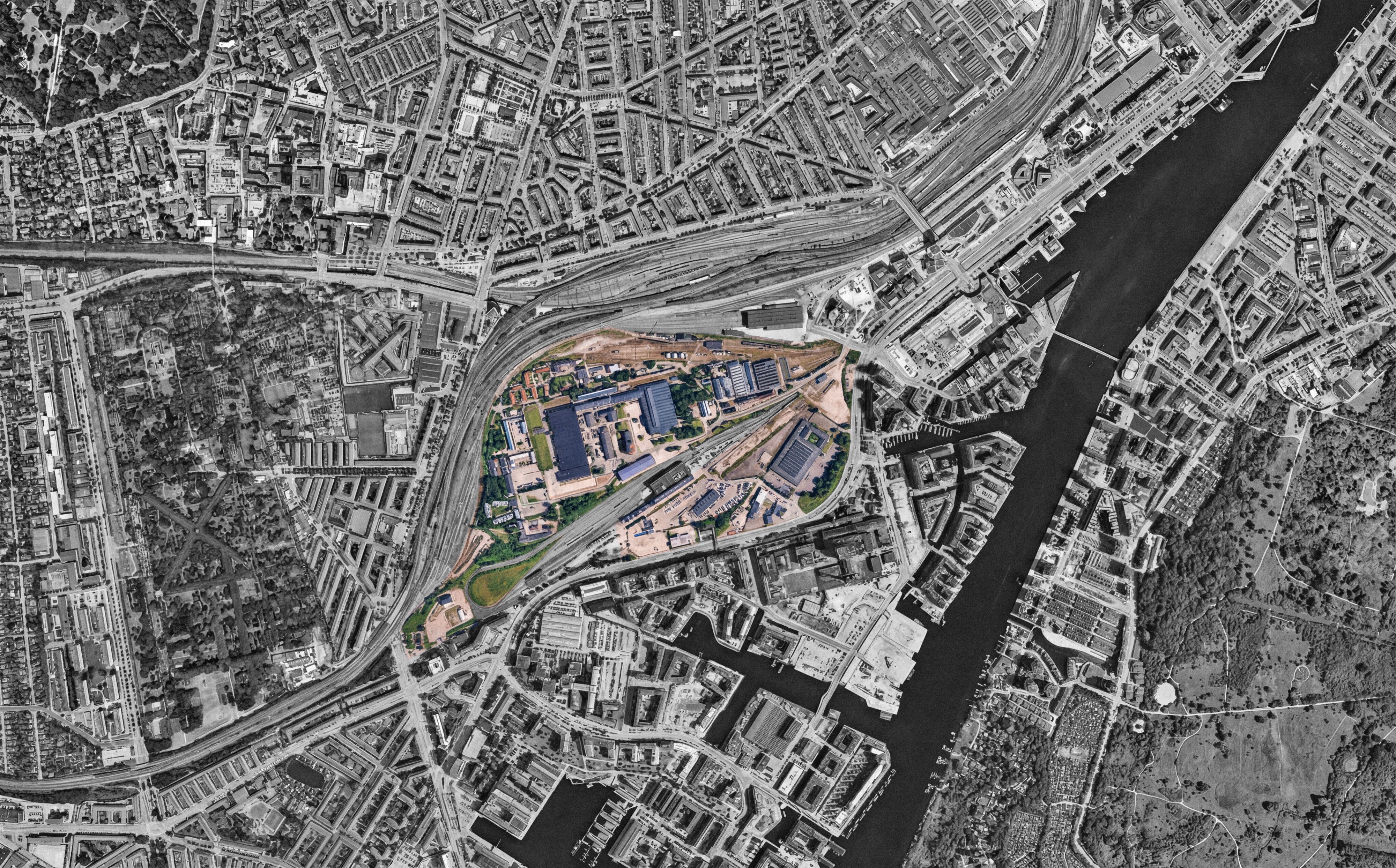
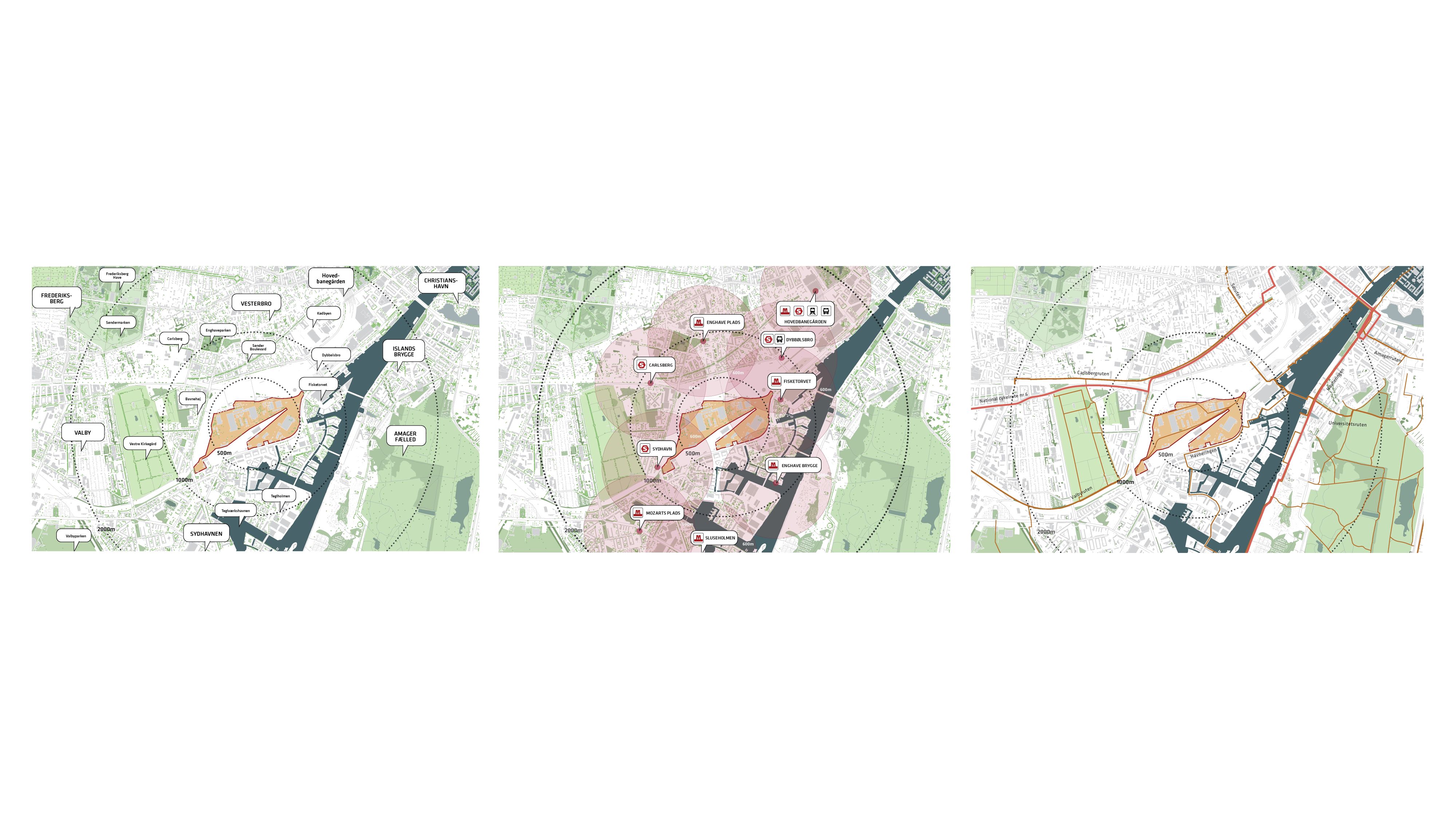
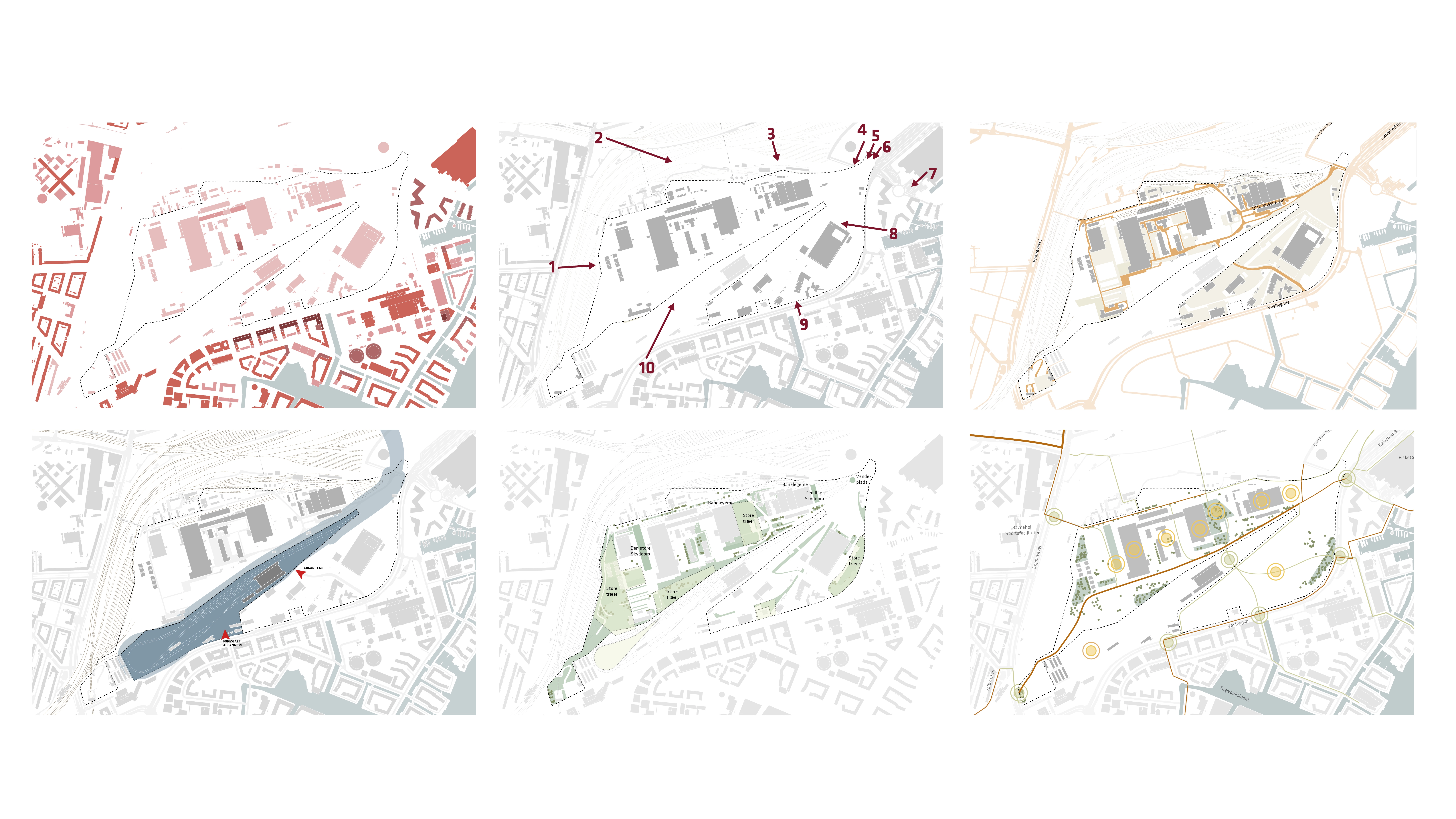
How can Copenhagen transform a complex industrial site into a thriving urban district that respects history, embraces sustainability, and strengthens connections with the surrounding city? The feasibility study on the Railway District, located between Ingerslevsgade, Enghavevej, and Vasbygade, presents an opportunity to answer this question. Currently comprising a series of workshops, tracks, and warehouses, the site is positioned to become a model for hybrid urban development, combining housing, workspaces, culture, recreation, and green infrastructure within a coherent framework.

Key numbers
No items found.
Guiding principles for transformation

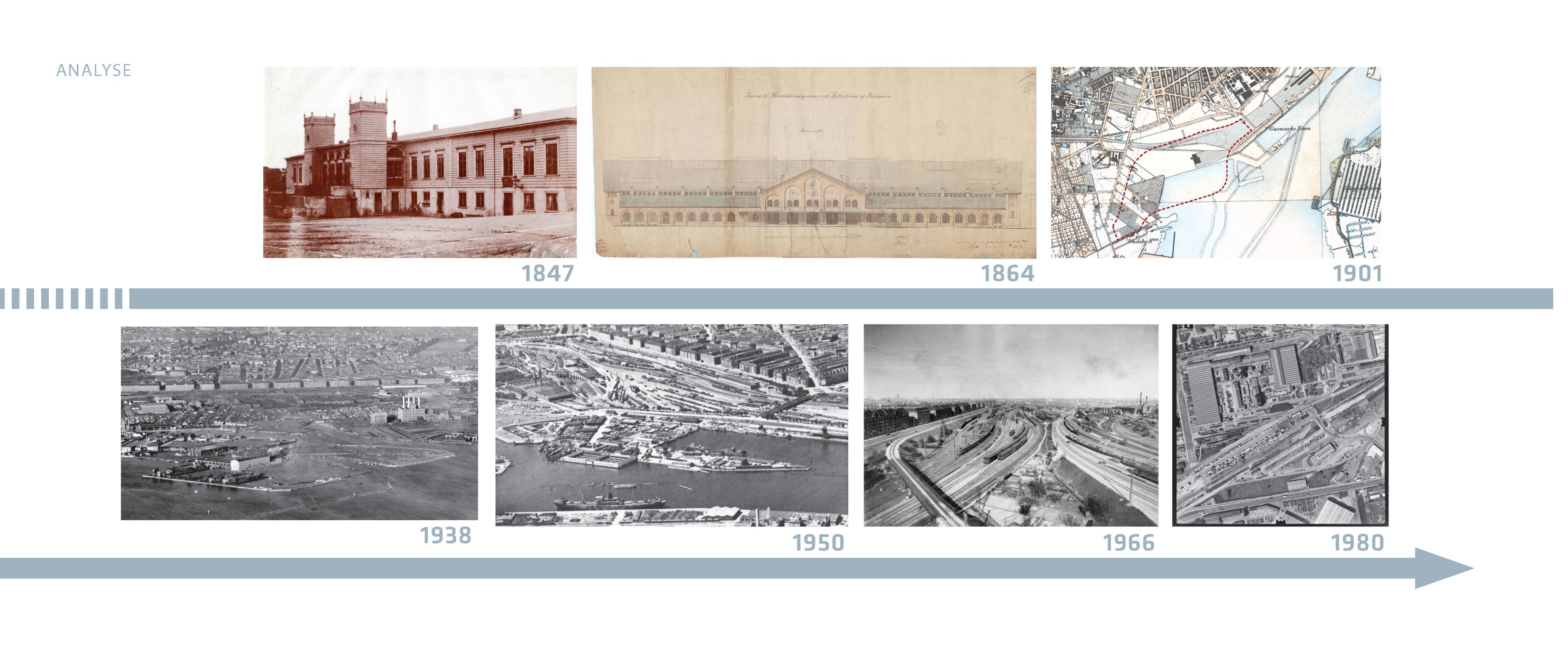
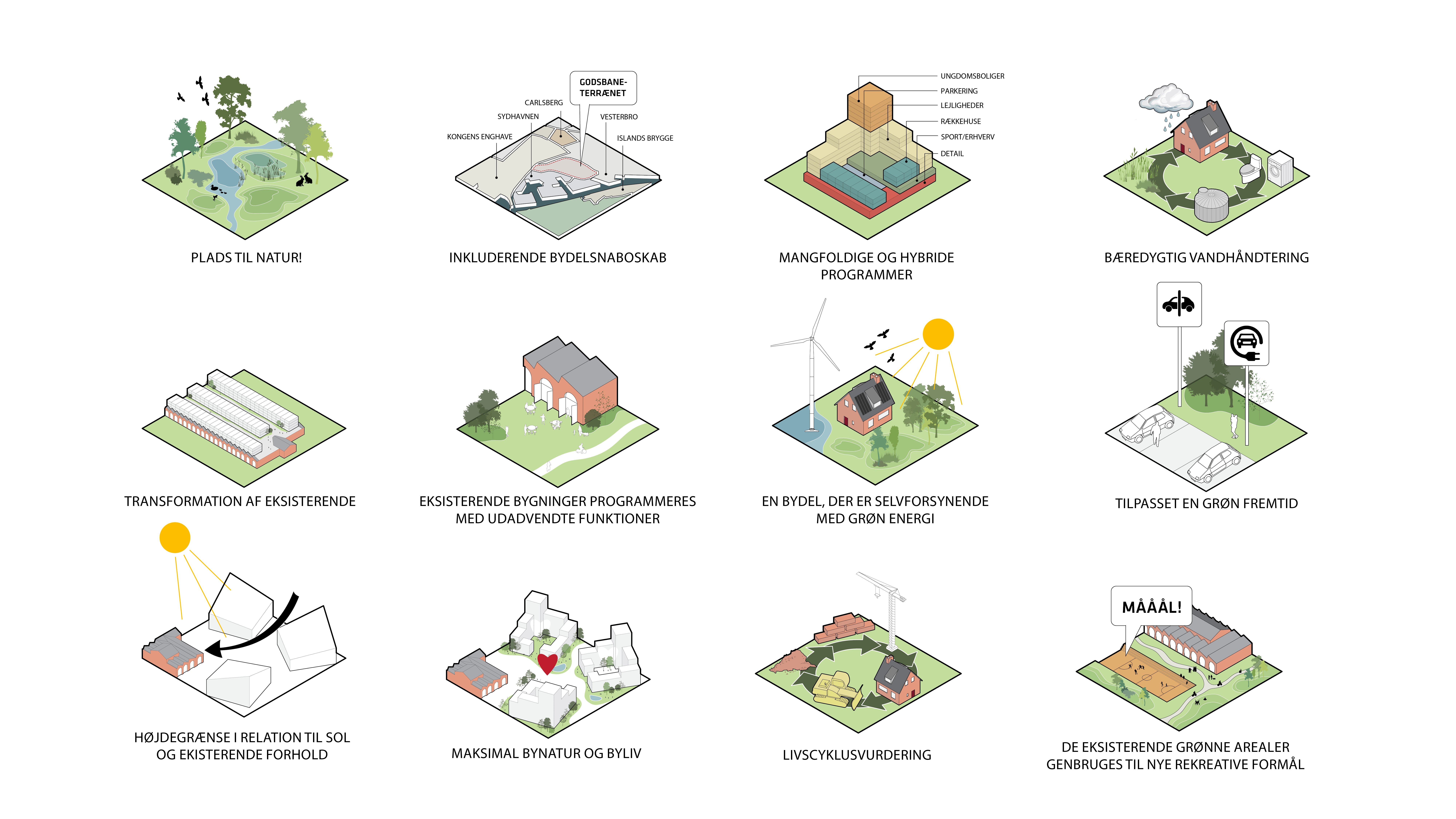
The feasibility study was guided by five core principles: transforming existing spatial qualities, prioritizing public and green mobility, promoting a diverse and inclusive neighborhood, supporting sustainable initiatives, and optimizing both recreational and built structures. The site’s unique history and iconography form the basis for transforming and further developing the existing buildings, with the old workshops becoming the center of the district’s new life. The district’s central location and proximity to stations make it natural to prioritize collective and green mobility, where electric cars, shared cars, metro, cyclists, and pedestrians all play a central role. Addressing complex challenges calls for innovative and integrated solutions that view the area as a whole, while opening the site to ensure that as many Copenhageners as possible can enjoy its spaces.

The district’s housing is intended to be groundbreaking, creating newliving arrangements and communities. At the same time, the district is to serveas a model for sustainability, integrating social, economic, and environmentalinitiatives from the outset. Recreational areas and buildings are optimized interms of views, noise, light, and microclimate, focusing on maximizing bothurban nature and urban life.

Comprehensive analysis of opportunities

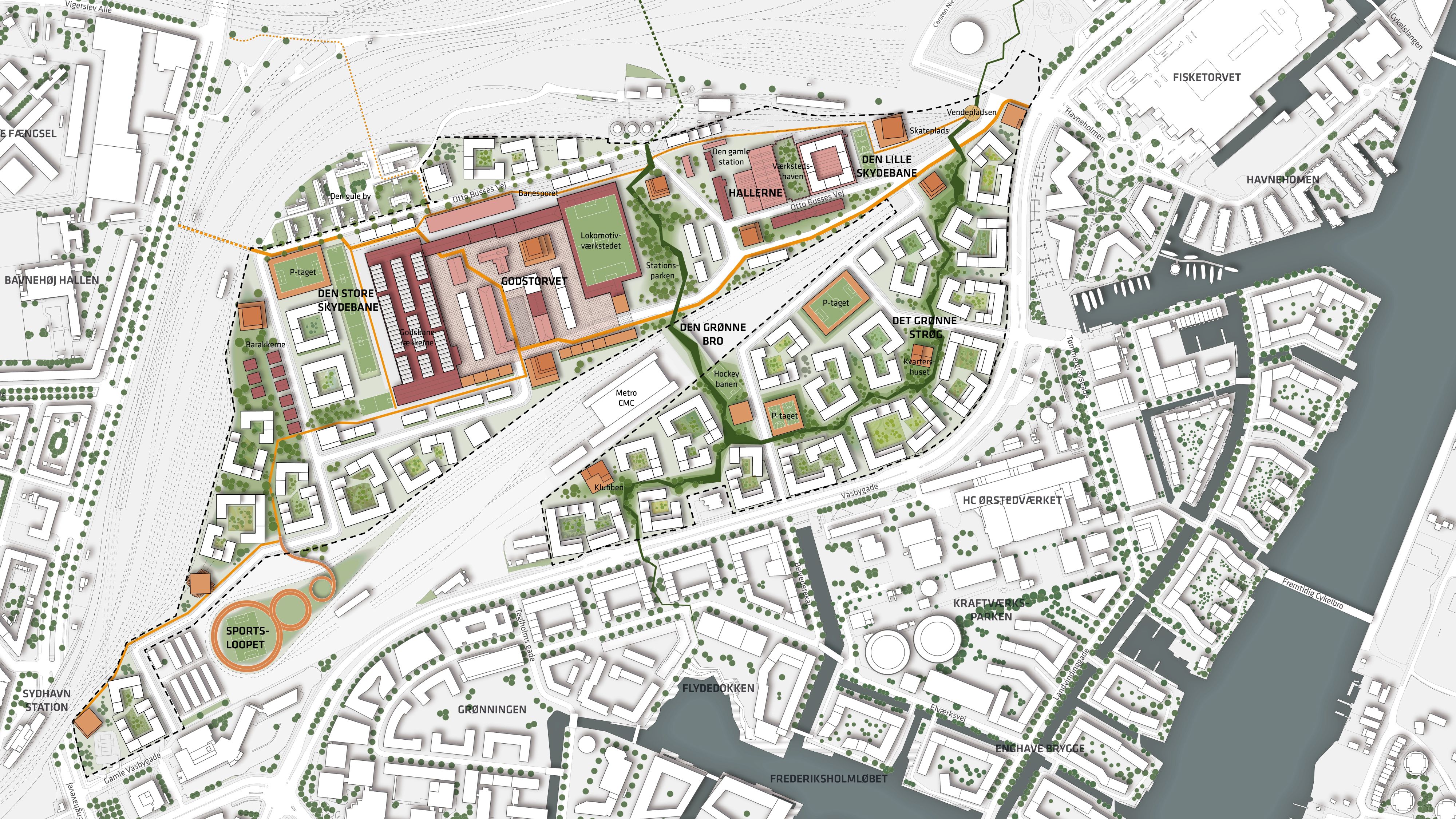
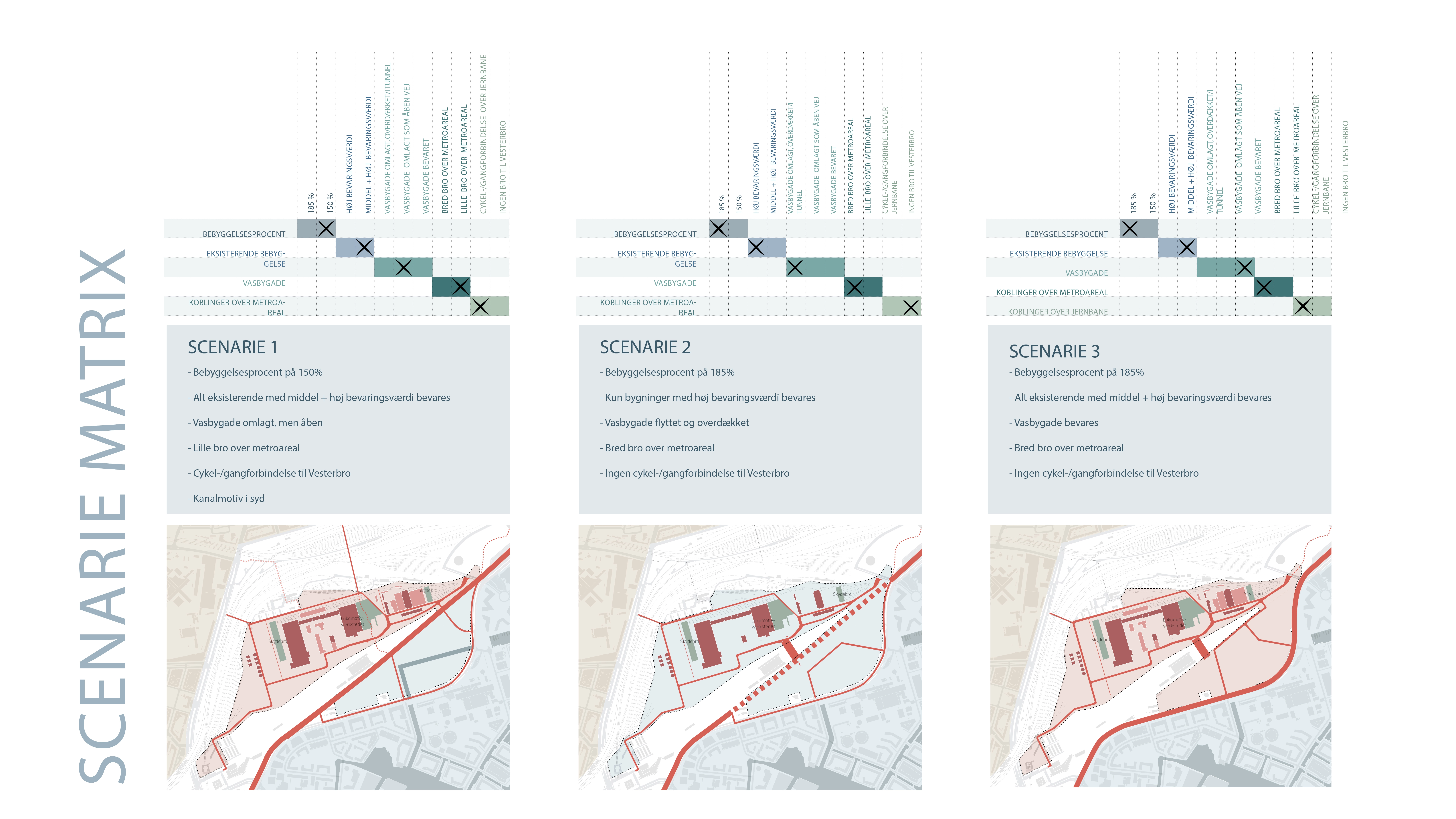
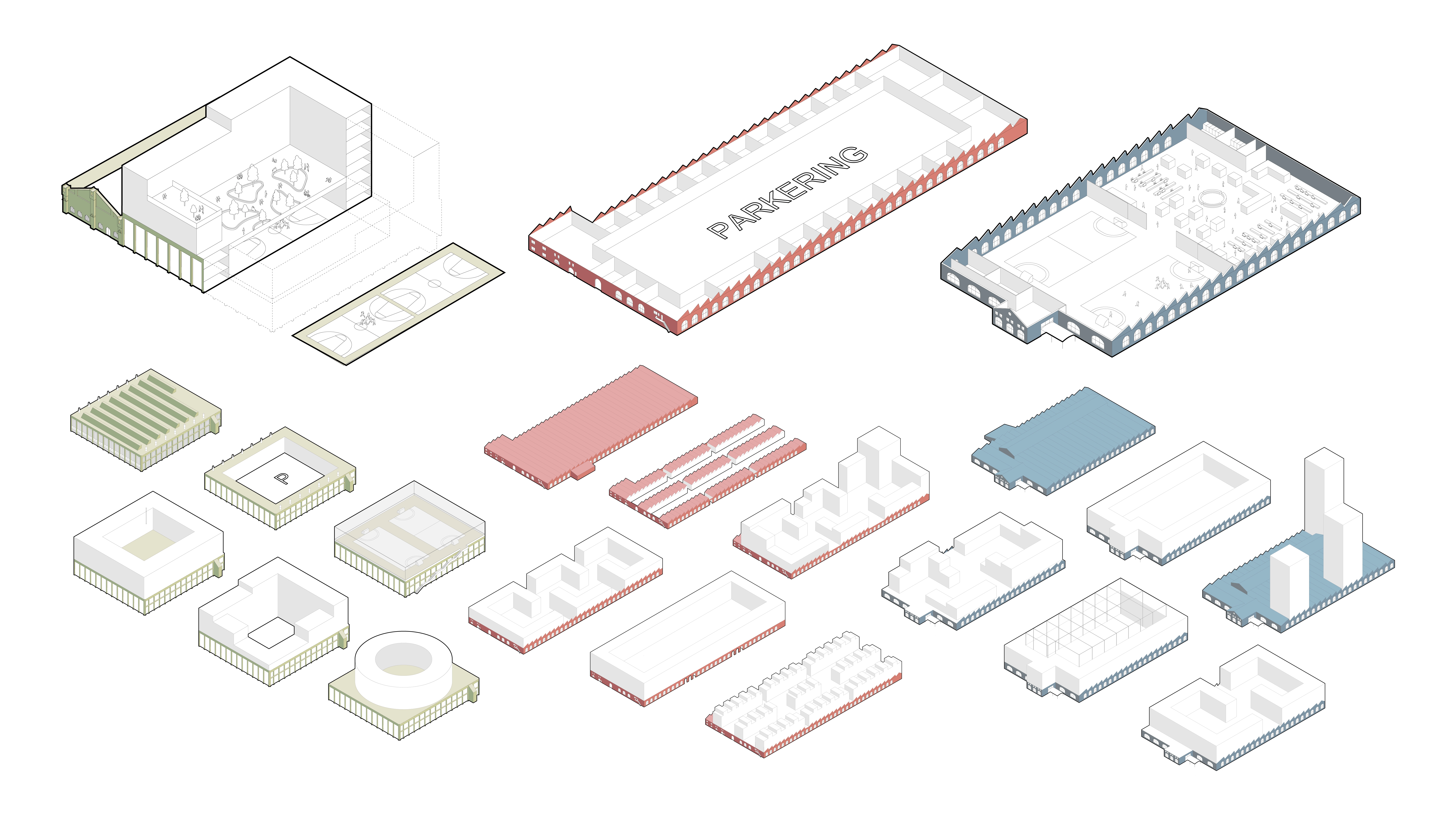
The study explores three differentiated development scenarios that test building volumes, heights, and connections while prioritizing mobility, sustainability, and the reuse of existing structures. The study identifies the potential to repurpose historic workshops as cultural and sports facilities, creating the heart of the new district while maintaining strong visual and spatial connections with surrounding neighborhoods.

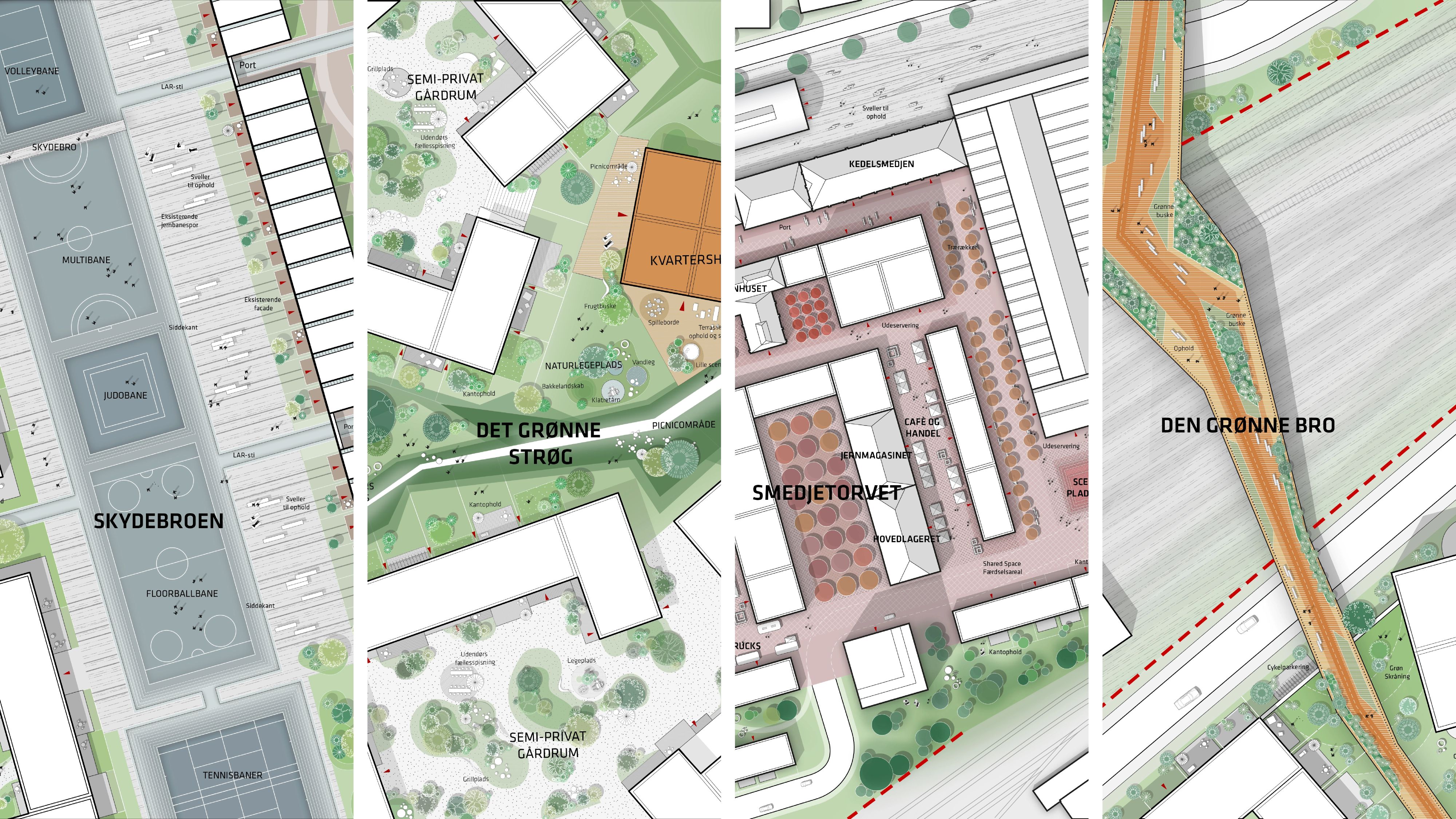
The district emphasizes a strong focus on nature, providing space for biodiversity and natural values, with existing green areas reused for recreational purposes. Existing buildings are transformed and programmed without ward-facing functions to open the area up to the surrounding city. Space is created for people, nature, and blue-green connections, with conditions optimized in terms of wind, sun, and microclimate. Building plots are arranged rationally, and height limits are defined according to sunlight and relationships with existing buildings.

The ambitions for the district are high: it is to be self-sufficient ingreen energy and a leader in sustainable water management. There is also astrong focus on mobility adapted to a green future, with optimized conditionsfor public transport, prioritization of active modes of transport, andincreased attention to shared mobility solutions.

Contact the team

General inqueries
Open external browser tap
No items found.
Project information

Project name: Jernbanebyen

Client: Freja Ejendomme and DSB Ejendomme

Collaborators: Technical preliminary studies by COWI

Role: Lead Consultant

Type: Preliminary investigations and feasibility studies related to transformation, layout, and the scope of new development. Reconfiguration of existing infrastructure and connections. Mapping and planning of both new and existing green areas. Placement of both public and private functions, etc., in dialogue with the City of Copenhagen and other stakeholders.

Period: Submitted to client on March 12,2019

Location: Copenhagen, Jernbanebyen, Denmark